Rising Stars Showcase
Meet the 2026 awardees
The CTAD Rising Stars Showcase, in partnership with the Alzheimer’s Association, recognizes outstanding early-career researchers in Alzheimer’s disease clinical research. This year, six awardees were selected from among the submitted abstracts. Each will present their work during a coffee break at CTAD 2026, in the Gloucester room on Level 3, giving attendees a chance to meet the next generation of investigators and discuss their findings directly with them.
Their work spans real-world anti-amyloid treatment response, imaging predictors of ARIA, biomarker endpoints in anti-tau trials, cognitive screening for trial enrollment, digital cognitive assessment in preclinical Alzheimer’s disease, and visual discrimination as an early marker of tau pathology.
Schedule at a glance
| Day | Coffee Break | Awardee | Poster |
| Tuesday, November 17 | Morning coffee break, 10:35–11:05 a.m. | Connor Dietz | P289 |
| Tuesday, November 17 | Morning coffee break, 10:35–11:05 a.m. | Zahra Shirzadi | P108 |
| Tuesday, November 17 | Morning coffee break, 10:35–11:05 a.m. | Yuta Katsumi | P107 |
| Tuesday, November 17 | Morning coffee break, 10:35–11:05 a.m. | Dorothy MacFarlane | P389 |
| Wednesday, November 18 | Morning coffee break, 10:25–11:00 a.m. | Casey Vanderlip | P433 |
| Wednesday, November 18 | Morning coffee break, 10:25–11:00 a.m. | Dhruv Kapadia | P426 |
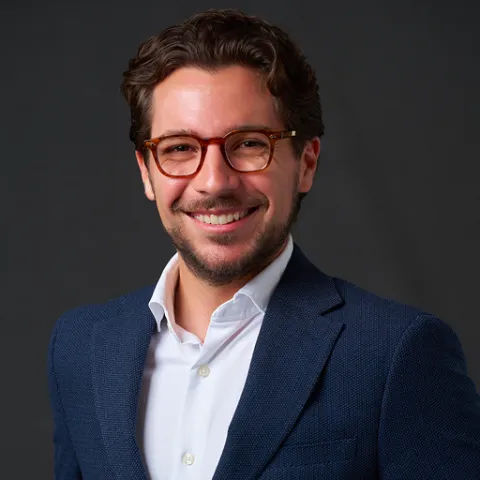
Connor Dietz
University of British Columbia, Vancouver, Canada
Poster P289
Therapeutic antibody interference with CSF tau assays in a gosuranemab basket trial across four primary tauopathies
KEY TAKEAWAY
Apparent CSF tau lowering during anti-tau immunotherapy may reflect assay interference rather than a true reduction in tau. Anti-tau trials should incorporate multiplexed assays reading distinct tau epitopes to distinguish artifact from genuine target lowering.
HIGHLIGHTS
TauBasket: a randomized, placebo-controlled phase 1b trial of gosuranemab in 25 participants with four primary tauopathy syndromes
Gosuranemab lowered total tau, pTau-181, pTau-217, and pTau-231, but brain-derived tau read at a distal epitope, NfL, and GFAP were unchanged
The pattern points to a general property of N-terminally directed anti-tau antibodies, with implications for biomarker endpoints in future trials
BIOGRAPHY
Dr. Connor Dietz, MD, FRCPC, is a behavioral neurologist at the University of British Columbia whose work focuses on fluid biomarkers and clinical trials in tauopathies and frontotemporal lobar degeneration (FTLD). After his MD and neurology residency at UBC, he completed a fellowship in the Clinical Trials and Therapeutics track of the UCSF Behavioral Neurology Training Program under the mentorship of Dr. Adam Boxer. He leads large-scale CSF and plasma proteomic analyses in progressive supranuclear palsy and familial FTLD through the 4RTNI and ALLFTD consortia, and led the analysis of the TauBasket trial. He is a Holloway Scholar of the Association for Frontotemporal Degeneration and an IMPACT-AD Fellow.
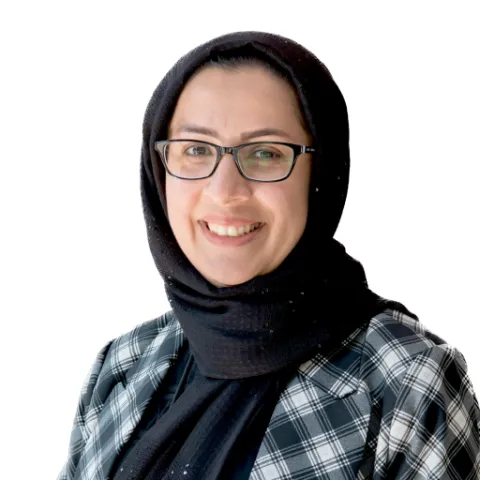
Zahra Shirzadi
Massachusetts General Hospital, Harvard Medical School, Boston, USA
Poster P108
Predictors of ARIA-H in the A4 Study: white matter hyperintensity and APOE ɛ4 selectively influence lobar microhemorrhages
KEY TAKEAWAY
White matter hyperintensities and APOE ε4 predict future lobar, but not deep, microhemorrhages in preclinical Alzheimer’s disease without amyloid clearance. This supports white matter hyperintensities as an early marker of cerebral amyloid angiopathy and can improve ARIA-H risk stratification and patient monitoring.
HIGHLIGHTS
Longitudinal MRI data from 1,138 cognitively unimpaired, amyloid-positive participants in the A4 Study
Higher baseline white matter hyperintensity burden doubled the risk of new lobar microhemorrhages, and APOE ε4 homozygosity was a strong predictor of superficial siderosis
Similar results in the placebo group point to the natural history of ARIA-H-like lesions, relevant to patient selection for anti-amyloid therapies
BIOGRAPHY
Zahra Shirzadi is an early-career neuroimaging scientist at Massachusetts General Hospital and Harvard Medical School who has worked in neurodegenerative disease research since 2013. Her research examines the interplay between cerebrovascular injury and proteinopathies in Alzheimer’s disease, with a focus on the causes of white matter injury. Since joining the Harvard Aging Brain Study in 2021, she has led the development and validation of imaging markers of cerebrovascular injury and pipelines for their longitudinal quantification. Her work has been funded by the Alzheimer Society of Canada, the BrightFocus Foundation, and the Alzheimer’s Association, and she received the BrightFocus Dr. Edward H. Koo Award (2023) and the Alzheimer’s Association Dale Schenk recognition (2026).

Yuta Katsumi
Massachusetts General Hospital, Harvard Medical School, Boston, USA
Poster P107
Predictors of longitudinal amyloid clearance due to lecanemab treatment: a preliminary report from a real-world clinical cohort
KEY TAKEAWAY
In patients with Alzheimer’s disease treated with lecanemab, older age predicts faster amyloid clearance, but only when baseline amyloid burden exceeds about 70 Centiloids. Below this threshold, age does not appear to influence treatment response.
HIGHLIGHTS
Real-world cohort of 121 patients from the Mass General Brigham Alzheimer Therapeutics Program, with amyloid PET at baseline and after 12 months of lecanemab
Amyloid burden fell by about 55 Centiloids on average, and 51% of patients reached amyloid-negative status
APOE ε4 status and clinical severity (MCI or mild dementia) did not predict the magnitude of amyloid clearance
BIOGRAPHY
Dr. Yuta Katsumi is Assistant Professor of Neurology at Harvard Medical School and Associate Director of PET Imaging Operations in the Frontotemporal Disorders Unit at Massachusetts General Hospital. A cognitive and systems neuroscientist, he uses multimodal neuroimaging to study how the brain’s functional organization shapes diverse trajectories of cognitive aging, including Alzheimer’s disease. His current work examines the cortical spread of pathology across the Alzheimer’s and frontotemporal dementia spectrum, the effects of anti-amyloid treatment on longitudinal brain changes, and precision neuroimaging with rapid MRI. His research is supported by the National Institute on Aging and the Alzheimer’s Association.
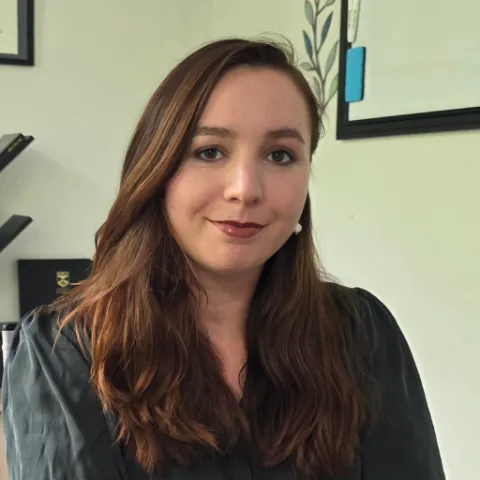
Dorothy MacFarlane
Adams Clinical, Watertown, USA
Poster P389
Age-dependent sensitivity of the MMSE for detecting amyloid-confirmed Alzheimer’s disease
KEY TAKEAWAY
The MMSE predicts amyloid-confirmed Alzheimer’s disease better in older than in younger trial candidates, highlighting the need for more sensitive screening measures as trials recruit younger participants.
HIGHLIGHTS
264 trial screening participants aged 56 to 85 with both an MMSE and an amyloid PET scan
At the standard MCI cutoff (MMSE 24), the predicted probability of Alzheimer’s disease was 10% at age 65 versus 33% at age 75
Age-stratified MMSE thresholds may improve enrollment in early-stage trials, pending replication in larger multi-site cohorts
BIOGRAPHY
Dr. Dorothy MacFarlane is an enrollment clinician at Adams Clinical, a clinical research site in Watertown, Massachusetts, specializing in psychiatric and neurologic drug development. She interviews prospective trial participants and conducts cognitive and functional assessments for Alzheimer’s disease trials. She also leads site-level research on the sensitivity of these assessments for detecting mild cognitive impairment due to Alzheimer’s disease and on optimizing pre-screening. She holds a PhD in Neuroscience, with a focus on neural circuitry, from the University of St Andrews, Scotland (2024).
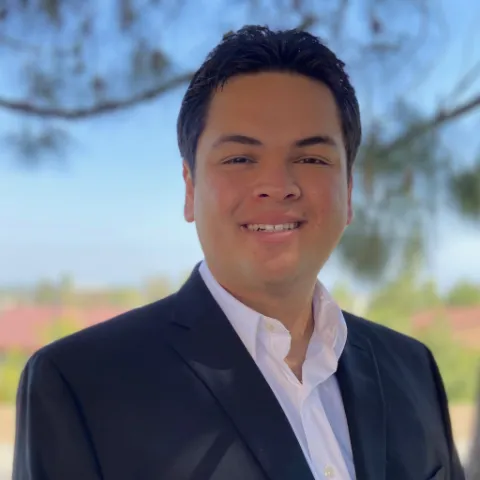
Casey Vanderlip
University of California, Irvine, USA
Poster P433
Digital cognitive signatures of biomarker-defined preclinical Alzheimer’s disease
KEY TAKEAWAY
Digital memory assessments detect biologically meaningful cognitive changes in preclinical Alzheimer’s disease, particularly in people with neocortical tau, supporting their use to identify, monitor, and enrich participants for early-stage trials.
HIGHLIGHTS
Screening data from two large secondary prevention trials, AHEAD and A4, using the Cogstate C3 digital battery
Amyloid-positive participants with neocortical tau showed the largest deficits, driven by hippocampal memory tasks
A reproducible digital cognitive signature increased with biological disease stage, while attention and psychomotor speed were unaffected
BIOGRAPHY
Casey Vanderlip is an MD/PhD student at the University of California, Irvine. His research focuses on digital cognitive assessments as scalable tools for detecting Alzheimer’s disease, predicting progression, and enriching clinical trials. By combining brief digital measures of hippocampal-dependent memory with amyloid and tau PET and blood-based biomarkers, he aims to improve how individuals are identified, monitored, and selected for prevention and early-intervention trials, and to bring digital assessments into routine clinical care.
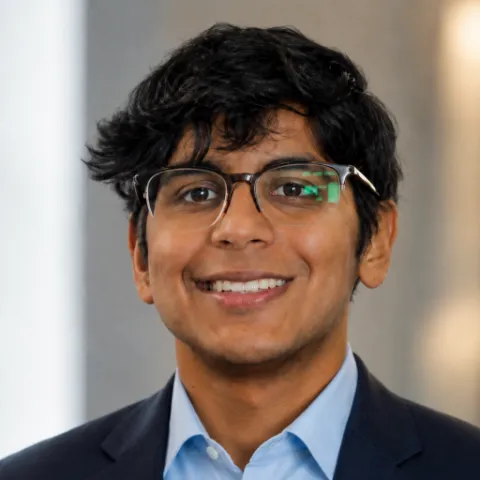
Dhruv Kapadia
Stanford University, Stanford, USA
Poster P426
Effects of regional tau accumulation on visual discrimination behaviors in clinically unimpaired older adults
KEY TAKEAWAY
In clinically unimpaired older adults, early tau accumulation in the inferior temporal cortex is linked to poorer visual discrimination of objects with overlapping features. Visual discrimination tasks may offer a scalable way to track subtle cognitive changes associated with early tau pathology.
HIGHLIGHTS
75 clinically unimpaired older adults from the Stanford Aging and Memory Study completed tau PET and an eye-tracked perceptual match-to-sample task
Tau in the inferior temporal cortex, but not the entorhinal cortex, was associated with lower accuracy on high-ambiguity discriminations of novel objects
Higher inferior temporal tau was also linked to more visual fixations before correct high-ambiguity choices, suggesting greater effort to tell similar objects apart
BIOGRAPHY
Dhruv Kapadia is a recent graduate of Stanford University, where he earned a BS in Human Biology and studied cognitive aging, Alzheimer’s disease, and clinical neuroscience. He works as a research assistant in the Stanford Aging and Memory Study under Dr. Alexandra Trelle, Dr. Anthony Wagner, and Dr. Elizabeth Mormino. His research combines psychophysical behavioral measures with neuroimaging biomarkers to develop more sensitive tools for detecting preclinical Alzheimer’s disease. His work and volunteer experience in memory care settings have shaped his interest in medicine and in accessible, behaviorally grounded approaches to earlier detection of neurodegenerative disease.